
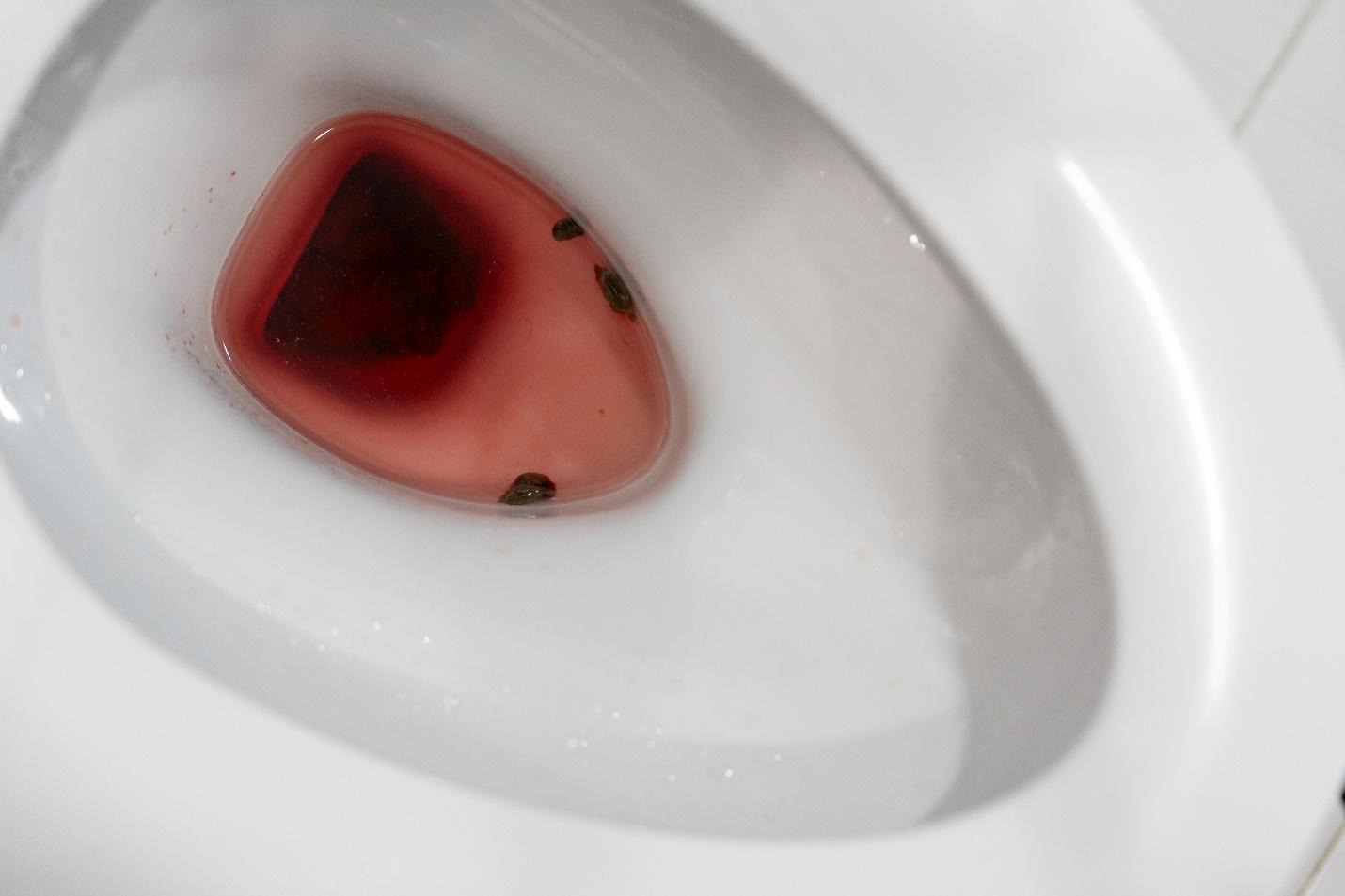
Noticing blood after a bowel movement can be unsettling, especially when you are unsure whether it is something minor or a sign of a bowel problem.
Haemorrhoids and anal fissures are common causes of fresh rectal bleeding. They often have recognisable patterns, such as bright-red blood after passing stool or pain during a bowel movement. However, bleeding can also occur with conditions affecting the bowel, including colonic polyps, inflammatory bowel disease (IBD) and colorectal cancer.
So how can you tell the difference?
The colour and appearance of the blood, whether passing stool is painful and any changes in your bowel habits can offer clues about where the bleeding may be coming from. These features cannot confirm the cause on their own, but they can help distinguish a typical haemorrhoid or fissure pattern from bleeding that may have another cause.
Before thinking about a specific condition, look at where the blood appears and what colour it is. This can provide clues about where the bleeding may be coming from.
| WHAT YOU NOTICE | WHAT IT MAY INDICATE |
| Bright-red streaks on toilet paper | Bleeding close to the anus, including haemorrhoids or an anal fissure |
| Blood coating the outside of the stool | A source near the anus or lower rectum |
| A few drops of fresh blood in the toilet | Can occur with haemorrhoids |
| Blood appearing mixed through the stool | May suggest bleeding from further inside the bowel |
| Dark-red or maroon stool | Can occur with bleeding further along the digestive tract |
| Black, tarry stool | Can indicate digested blood from the upper gastrointestinal tract |
These patterns can provide useful clues, but appearance alone cannot tell you the cause. Certain foods, supplements and medicines can also change the colour of your stool.
Pain can provide a useful clue when distinguishing between haemorrhoids and an anal fissure, although it cannot confirm the cause on its own.
| PAIN PATTERN | WHAT IT MAY SUGGEST |
| Sharp or burning pain | An anal fissure is more likely when bleeding occurs with sharp, tearing or burning pain during a bowel movement. The pain may continue afterwards, particularly following constipation or the passage of a hard or large stool. |
| Little or no pain | Internal haemorrhoids often cause painless, fresh bleeding. Blood may appear on the toilet paper, coat the outside of the stool or drip into the toilet. Itching, irritation or tissue protruding from the anus can also occur. |
| A painful lump | A tender lump around the anus can occur with a thrombosed external haemorrhoid, which can cause marked pain and swelling. |
Rectal bleeding can take on greater significance when it occurs alongside a persistent change from your usual bowel habits.
Changes to look out for include:
These symptoms can have many possible causes and do not necessarily indicate colorectal cancer or another serious bowel condition. What matters is the overall pattern and whether the changes persist.
For example, a single episode of fresh bleeding after passing a hard stool presents a different clinical picture from recurrent bleeding accompanied by an ongoing change in bowel habits.
Not all rectal bleeding comes from haemorrhoids or an anal fissure. Bleeding can also occur with conditions affecting the colon or rectum.
| POSSIBLE CAUSES | WHAT YOU MAY NOTICE |
| Colonic polyps | Many colonic polyps cause no symptoms, although some can bleed. Certain types can develop into colorectal cancer over time, which is one reason colorectal cancer screening is recommended even for people who feel well. |
| Inflammatory bowel disease | Crohn’s disease and ulcerative colitis can cause bleeding when the bowel is inflamed. Other symptoms can include persistent diarrhoea, abdominal pain, urgency, mucus in the stool and unexplained weight loss. |
| Colorectal cancer | Symptoms vary, but can include rectal bleeding or blood mixed with the stool, a persistent change in bowel habits, unexplained weight loss, ongoing abdominal discomfort, unusual tiredness or iron-deficiency anaemia. |
Importantly, early colorectal cancer can cause few or no obvious symptoms. This is why the overall pattern of bleeding, accompanying symptoms and individual risk factors matter rather than any one symptom in isolation.
Blood in the stool is particularly important to discuss with a doctor when it:
Dr Aaron Poh will also consider factors such as your age, medical history and family history of colorectal cancer or polyps. Depending on your symptoms and risk factors, he may recommend further investigation, such as a colonoscopy, to examine the colon and rectum and identify where the bleeding is coming from.
The significance of rectal bleeding depends on the overall pattern and accompanying symptoms, rather than simply how much blood you can see.
Not every episode of rectal bleeding points to a serious bowel condition. However, if the bleeding keeps returning, looks different from usual or occurs alongside other bowel changes, it is worth finding out what is causing it.
At Alpine Surgical Practice, Dr Aaron Poh can evaluate rectal bleeding, identify possible causes and discuss the next steps based on your symptoms and risk factors.
If you have noticed blood in your stool and are concerned about the cause, contact us to arrange a consultation with Dr Aaron Poh.
Frequent diarrhoea can irritate the anal area and aggravate existing haemorrhoids or fissures. However, persistent diarrhoea with blood can also occur with conditions such as inflammatory bowel disease.
No. Haemorrhoids, anal fissures and several other conditions can cause rectal bleeding. However, colorectal cancer can also cause blood in the stool, which is why the overall bleeding pattern and any accompanying symptoms matter.
A Faecal Immunochemical Test (FIT) detects small amounts of blood in the stool that may not be visible. A colonoscopy allows your doctor to examine the lining of the colon and rectum directly and, when appropriate, remove polyps or take tissue samples.
FIT is primarily a screening test for eligible people without symptoms. If you can already see blood in your stool, your doctor may recommend a different approach based on your symptoms and risk factors.
Yes. A negative FIT does not explain why visible bleeding is occurring. If you notice blood in your stool, particularly if it recurs or occurs with other bowel changes, discuss the symptoms with your doctor even if your FIT result was negative.
Your doctor will ask about the colour and pattern of the bleeding, bowel habits, other symptoms and relevant medical or family history. They may also perform an examination and, depending on the findings, recommend further tests such as a colonoscopy.

Dr Aaron Poh is a fully accredited General Surgeon with dual subspecialties in Colorectal Surgery and Trauma Surgery, recognised by Singapore’s Specialist Accreditation Board and Ministry of Health. He is the Medical Director of Alpine Surgical Practice, with clinics located at Mount Elizabeth Hospital, Parkway East Hospital, and Farrer Park Hospitals.
Dr Aaron Poh has extensive experience, having performed over 5,000 endoscopic procedures. He is a strong advocate for early detection through colonoscopy, particularly for individuals at risk of colorectal cancer. His expertise includes advanced endoscopic techniques such as Endoscopic Mucosal Resection (EMR) for complex polyps and colonic stenting for obstructed cancers, which help patients avoid major emergency surgery.
When surgery is required, he specialises in minimally invasive laparoscopic colorectal cancer surgery, offering patients faster recovery with less pain and scarring. In addition to cancer care, he manages a wide range of anal conditions including haemorrhoids, fistulas, fissures, and abscesses, providing comprehensive colorectal treatment.

Copyright © Colonoscopy Doctor Singapore by Alpine Surgical Practice | Terms & Conditions


