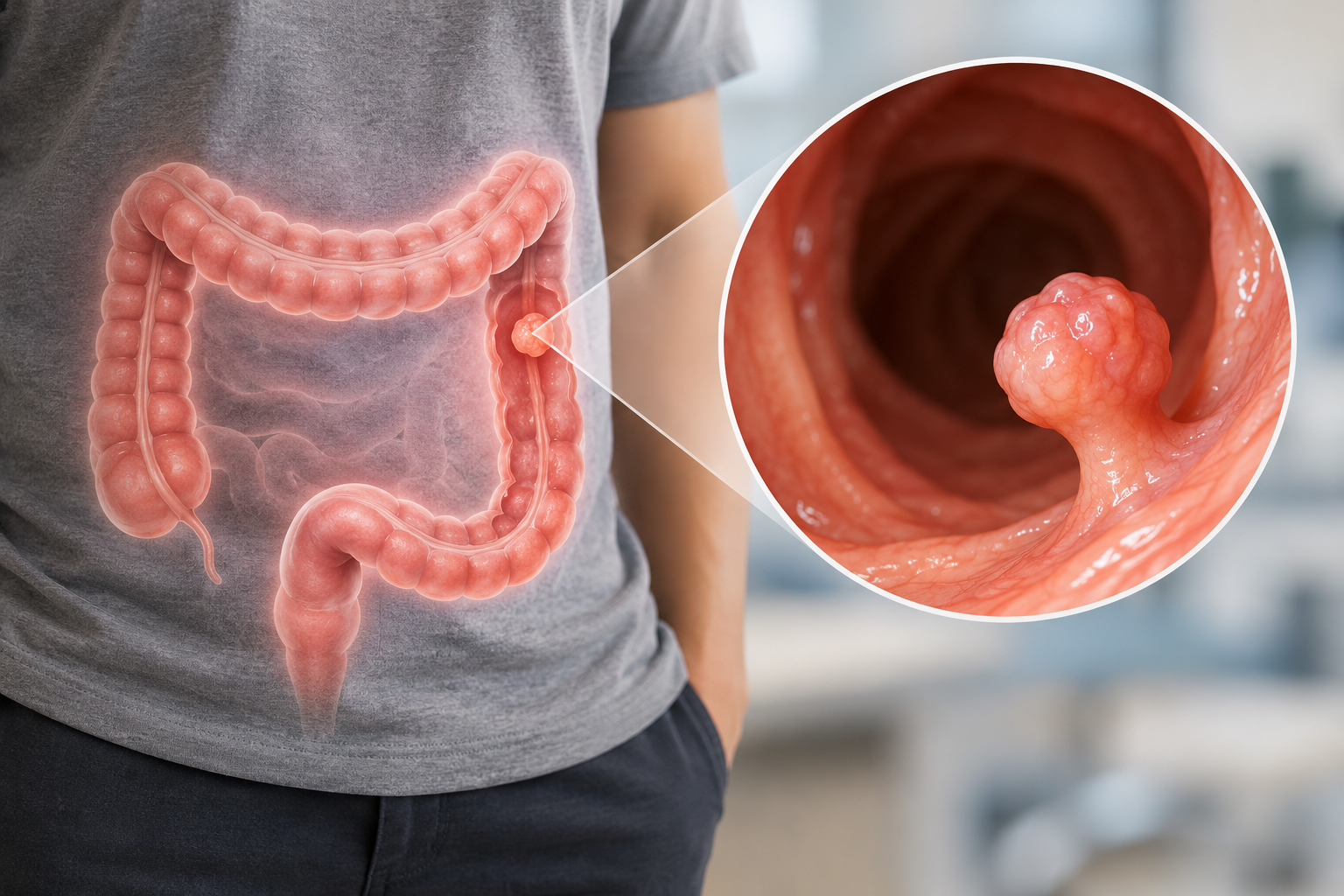
Finding out that you have a colon polyp can be worrying, especially if your first thought is whether it could be cancer.
The reassuring news is that not all colon polyps are cancerous. In fact, many are discovered during routine colonoscopies in people who otherwise feel perfectly well.
However, while some remain harmless, others have the potential to develop into colorectal cancer over time. What matters is understanding the type of polyp, its characteristics and whether any abnormal changes are present.
In this article, we explore the different types of colon polyps, what makes some more concerning than others and how early detection and removal can help reduce your risk of colorectal cancer.
Colon polyps are small growths that develop on the inner lining of the large intestine, which includes the colon and rectum. They are relatively common, especially as people get older, and often go unnoticed because they don't cause any obvious symptoms.
Not all polyps look the same. Some grow on a stalk, resembling a small mushroom, while others have a broad base or lie flat against the intestinal lining. They can also vary in size, from just a few millimetres to several centimetres.
While the appearance of a polyp can provide useful clues, you cannot tell whether it is cancerous simply by looking at it. Doctors generally need to examine a tissue sample under a microscope to determine the type of polyp and whether any abnormal cellular changes are present.
No. Most colon polyps are not cancerous, and finding one during a colonoscopy does not automatically mean you have colorectal cancer.
However, some polyps have the potential to become cancerous over time. Doctors generally distinguish between three categories:
The type of polyp plays an important role in determining its cancer risk.
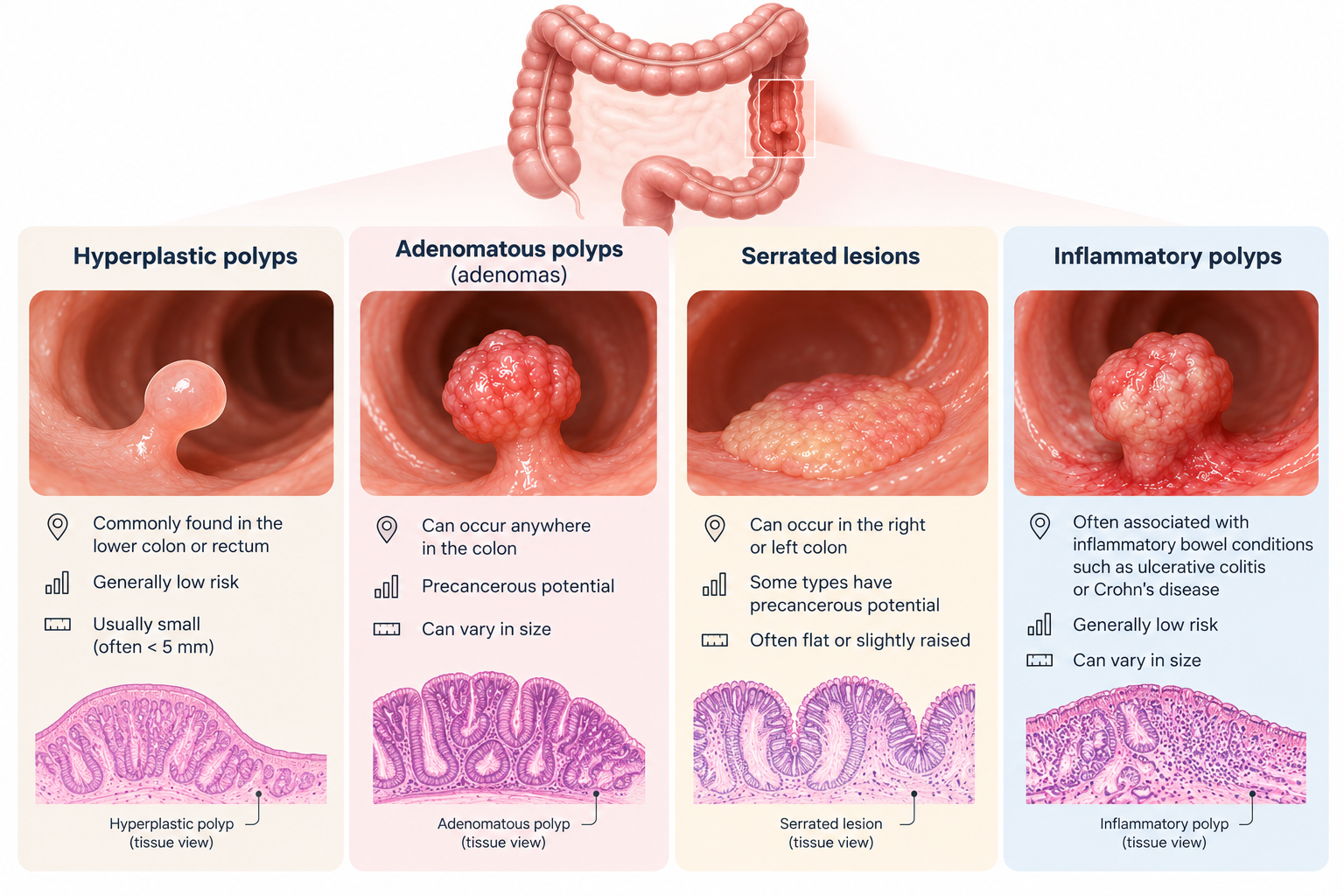
| Type of polyp | What you should know |
| Hyperplastic polyps | Usually harmless, especially when small and located in the lower colon or rectum. |
| Adenomatous polyps (adenomas) | Considered at higher potential for cancerous change , although most do not develop into cancer. |
| Serrated lesions | Certain types, such as sessile serrated lesions and traditional serrated adenomas, have a higher potential to develop into colorectal cancer over time. |
| Inflammatory polyps | Often associated with inflammatory bowel conditions such as ulcerative colitis or Crohn's disease. They are generally not precancerous themselves. |
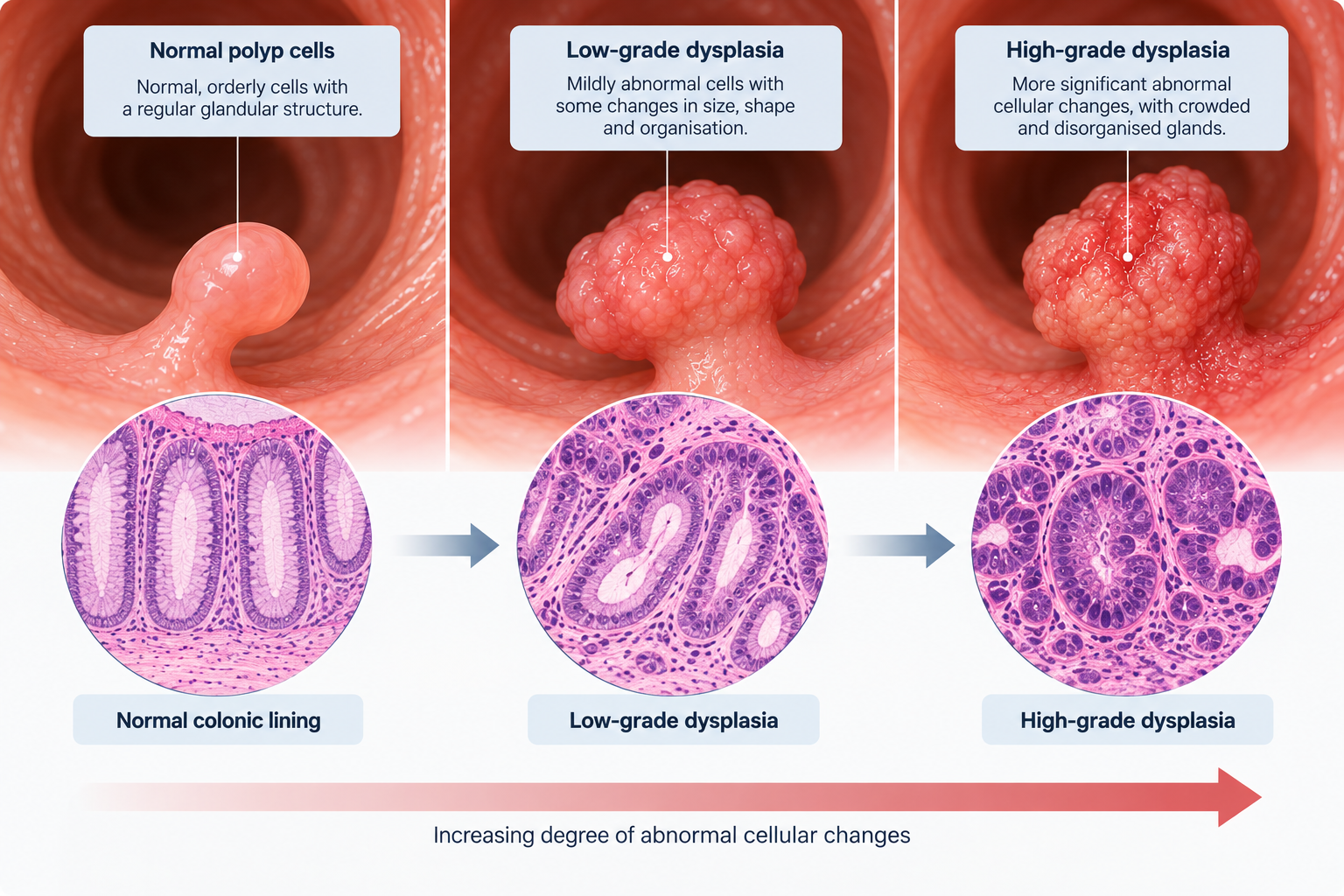
Not all colon polyps carry the same risk of developing into cancer. Some remain harmless, while others can gradually develop abnormal cellular changes over several years.
When assessing a polyp, doctors look at several factors to understand how concerning it might be:
No single factor tells the whole story. Your doctor will consider these findings together, including the results of any tissue examination, to determine whether further treatment or follow-up is needed.
Most colon polyps don't cause noticeable symptoms. You could have one or several polyps without experiencing any pain, bleeding or changes in your bowel habits.
This is why waiting for symptoms isn't always the best approach.
A colonoscopy allows your doctor to examine the colon directly, identify polyps and, in many cases, remove them during the same procedure. This makes it an important tool for both detecting polyps and preventing colorectal cancer.
During a colonoscopy, your doctor gently inserts a thin, flexible tube called a colonoscope through the anus and guides it through the rectum into the colon.
A small camera at the tip provides a live view of the intestinal lining, allowing your doctor to look for polyps and other abnormalities. The colonoscope can usually be advanced through the entire colon.
If your doctor discovers a polyp, they can often remove it immediately using specialised instruments passed through the colonoscope. The removal of the polyps do not cause any pain
Depending on the polyp's size and shape, your doctor may use a small wire loop (snare) or other techniques to remove the growth. The tissue is then sent to a laboratory to determine the type of polyp and whether any precancerous or cancerous changes are present.
Removing precancerous polyps before they develop into cancer is one of the key ways colonoscopy helps reduce the risk of colorectal cancer.
Finding out that you have a colon polyp can be worrying, but most polyps are not cancerous. Even when a polyp is precancerous, it doesn't mean that cancer has already developed.
Early detection and removal of precancerous polyps can help reduce the risk of colorectal cancer. Since colon polyps often develop without noticeable symptoms, colorectal cancer screening plays an important role in identifying these growths before they progress.
Book a consultation with Dr Aaron Poh for colorectal cancer screening and early detection of colon polyps.
Many colorectal cancers develop gradually from precancerous polyps over several years, often around 7-10 years or longer. However, the timeline varies depending on the type of polyp and its cellular changes. Not all polyps become cancerous, and some can progress more quickly than others.
Colon polyps do not disappear without treatment. While some small polyps may remain unchanged, others can grow or develop abnormal cellular changes. Doctors commonly remove polyps during colonoscopy to allow further examination and reduce the risk of future complications.
No. A precancerous polyp contains abnormal cells with the potential to become cancerous, but this does not mean it will inevitably progress to cancer. Removing these polyps during colonoscopy can substantially reduce the risk of colorectal cancer developing from them.
The recommended interval depends on the number, size and type of polyps removed, as well as their microscopic findings and your personal or family history. Some people require earlier follow-up, while others can return to routine screening. Your doctor will advise on an appropriate schedule based on your results. A regular interval is between 4-5 years.

Dr Aaron Poh is a fully accredited General Surgeon with dual subspecialties in Colorectal Surgery and Trauma Surgery, recognised by Singapore’s Specialist Accreditation Board and Ministry of Health. He is the Medical Director of Alpine Surgical Practice, with clinics located at Mount Elizabeth Hospital, Parkway East Hospital, and Farrer Park Hospitals.
Dr Aaron Poh has extensive experience, having performed over 5,000 endoscopic procedures. He is a strong advocate for early detection through colonoscopy, particularly for individuals at risk of colorectal cancer. His expertise includes advanced endoscopic techniques such as Endoscopic Mucosal Resection (EMR) for complex polyps and colonic stenting for obstructed cancers, which help patients avoid major emergency surgery.
When surgery is required, he specialises in minimally invasive laparoscopic colorectal cancer surgery, offering patients faster recovery with less pain and scarring. In addition to cancer care, he manages a wide range of anal conditions including haemorrhoids, fistulas, fissures, and abscesses, providing comprehensive colorectal treatment.

Copyright © Colonoscopy Doctor Singapore by Alpine Surgical Practice | Terms & Conditions


